Practical strategies to protect your well-being
Finding the balance between professional responsibilities and personal well-being should be at the top of your to-do list for this year. It’s no surprise that we spend most of our time at our workplace, but that doesn’t mean that it should take up all our personal identity or mental bandwidth. With the pressure to always be “on,” employees need to remember to take time to dig deeper into their personal development, too.
In an article on the nursing industry, the University of Texas Permian Basin outlines how work-life balance goes beyond a 50/50 split between the two. A healthy balance of professional and personal wellness is the key to excelling in both arenas of life. You must lean into and remember what’s important to you outside of work to be your best self at work — it’s a feedback loop. Like the phrase, “iron sharpens iron,” striving for personal growth will by default lead to professional growth and vice versa.
Why Work-Life Balance Matters
Striving for a work-life balance is the foundation of well-being. Taking the time to prioritize this brings you benefits that weave themselves into every aspect of your life (and work). Overall, it’s about creating harmony between your professional responsibilities and personal priorities.
- Improved Mental Health: Maintaining a mental inventory of what you give to your job and what you give to yourself is the ultimate act of self-care.
- Higher Productivity at Work: It sounds a bit counterintuitive, but working longer hours doesn’t always equal better results. Taking the time to recharge personally allows you to return to work more focused, creative, and efficient.
- Career Longevity: Building habits at work that curb burnout ultimately ensures you can grow professionally without sacrificing personal happiness, because it should never be one or the other.
Common Challenges
Of course, this is often easier said than done. We can instinctively recognize when work is taking a toll on us, but it is challenging to turn that into action.
- Blurred Boundaries: It can be hard to “switch off” our work selves when we clock out. Learning to time block what your work life demands from you vs. your home life is key to not bring your work home with you.
- Overcommitment: Trying to show up as your best self to work every day is unsustainable. Recognize that there will be days where you can be at 100% and others that 50% is all you can give. Bring the best you can each day and communicate that with yourself and your team to avoid overcommitting or burning out as a result.
- Technology Overload: Mental Health America highlights how the same tech that makes our jobs easier, can also be the cause of burnout. Pending the urgency of the tasks you are responsible for; it is healthy to turn off notifications or emails for work when you are on your day off.
Practical Strategies to Prioritize Balance
Boundaries: Define your work hours and expectations with your management and stick to them. It is easy to want to do more or “finish one last thing” outside of work hours, but your time away from work deserves more attention.
Communication with Managers: Advocate for yourself if something at work is overwhelming, you need help, or you just need someone to talk to. Your management can’t read your mind. It may be uncomfortable, but having the hard conversation is well worth it.
Take Breaks: Resting is just as productive as checking everything off your to-do list. You have PTO and days off to use. Properly recharging your energy levels allows you to bring your best back to the office on Monday.
Create a Dedicated Workspace: Separating work from personal life physically and digitally is a must. Having an office or place where you can physically associate with work will create mental clarity on those personal boundaries.
Building Healthy Habits Outside of Work
Becoming more well-rounded starts with building a routine that works for you in and out of the office. To cover your bases, both your brain and your body should be engaged.
- Exercise & Movement: Physical activity daily is great for your body and mind.
- Mindfulness & Mental Health: Mediation and journaling are deeply impactful to practices.
- Social Connection: Relationships outside of work, whether it is friends or family, are the main ingredient to living a full life.
- Hobbies & Personal Growth: Actively engage in opportunities that bring you joy. Life is too short to not have fun!
How Organizations Can Support
While you, as an employee, play a key role in creating balance for yourself; organizations have an equally important responsibility to foster a healthy work environment. The National Library of Health published an article backing this idea that policies can support improved quality of life in the healthcare industry. Here are a few ways organizations can make a difference that mirror your own strategies:
- Flexible Work Environments
- Clear Expectations
- Wellness Programs
- Encouraging PTO Usage
- Open Communication Channels
Organizations that invest in these initiatives create a win-win scenario: employees feel valued and supported, and companies benefit from happier employees with stronger morale.
Conclusion
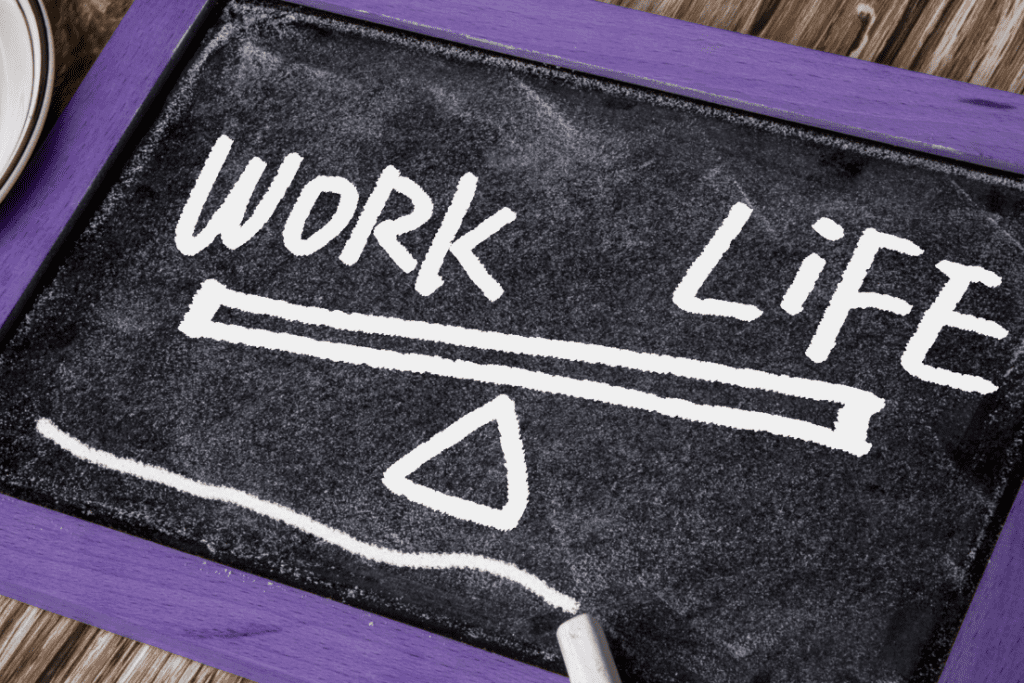
A healthy work-life balance is teeter-tottering the two largest components of who you are, so it’s natural to have your efforts ebb and flow. Remember, it’s not about perfection; it’s about making intentional choices that protect your personal well-being while supporting your professional goals. Balance looks different for everyone, so give yourself grace throughout this ongoing process. Start small, you don’t have to change everything all at once.