How to Regulate the Mayhem in the Workplace
The modern workplace often feels like a busy train station at rush hour. Trains roar in and out without warning, scheduling changes are part of the normal cadence, people are constantly rushing around, and unexpected moments happen at every turn. Even within this chaos, there’s a way to find a pattern. A rhythm that brings a strange sort of order to your every day.
The way through is sitting with these few realities:
- You don’t control the trains.
- You don’t control the schedules.
- You don’t control the crowds.
- You do control your breath, your pace, and how you move through the crowd.
Finding an anchor for yourself allows you to find the calm in the chaos around you, and then the station doesn’t feel as overwhelming. The normal flow of traffic will no longer phase you and you become a constant in an ever-changing environment. Staying grounded and choosing your next step with intention allows you to take control in the chaos at work.
The Effects of Controlled Chaos
Stress rooted in a chaotic environment can shift our inner world if we don’t find ways to stay grounded. Existing in an environment that feels like a whirlwind can significantly impact a person. Some check-ins you can make with yourself while maintaining balance:
- Professional Impact: reduced productivity, second-guessing, feeling behind even when you’re not
- Physical Impact: tension headaches, trouble sleeping, burnout signals
- Mental Impact: lack of focus, trouble making clear decisions, overstimulation
- Emotional impact: stress and anxiety, irritability, emotional fatigue
How to Regulate
Though the external chaos will always ebb and flow, your internal responses are the one thing you can always control. Focusing on grounding practices and intentional self‑care allows you to create a stable center that helps you navigate even the messiest moments. There is no one right way to approach regulation as it is an incredibly personal experience, but finding your anchor, controlling your controllables, building a support system, and reframing the chaos are great places to start.
Finding Your Anchor
An anchor, in this context, is something that serves as your grounding mechanism to bring you back to center. A couple of examples could be:
- a breathwork routine
- a mantra or affirmation
- taking a quiet moment with yourself to block out the noise.
Having an anchor that you can always come back to allows you to create predictability in a potentially unpredictable situation. Just like anything, it will need to become a habit in your daily or weekly practice to be effective over time.
When you find yourself feeling overwhelmed, run through a mental (or physical) checklist to ground yourself. Find your anchor, take a deep breath, and gather even a moment of stillness in the middle of your busy day.
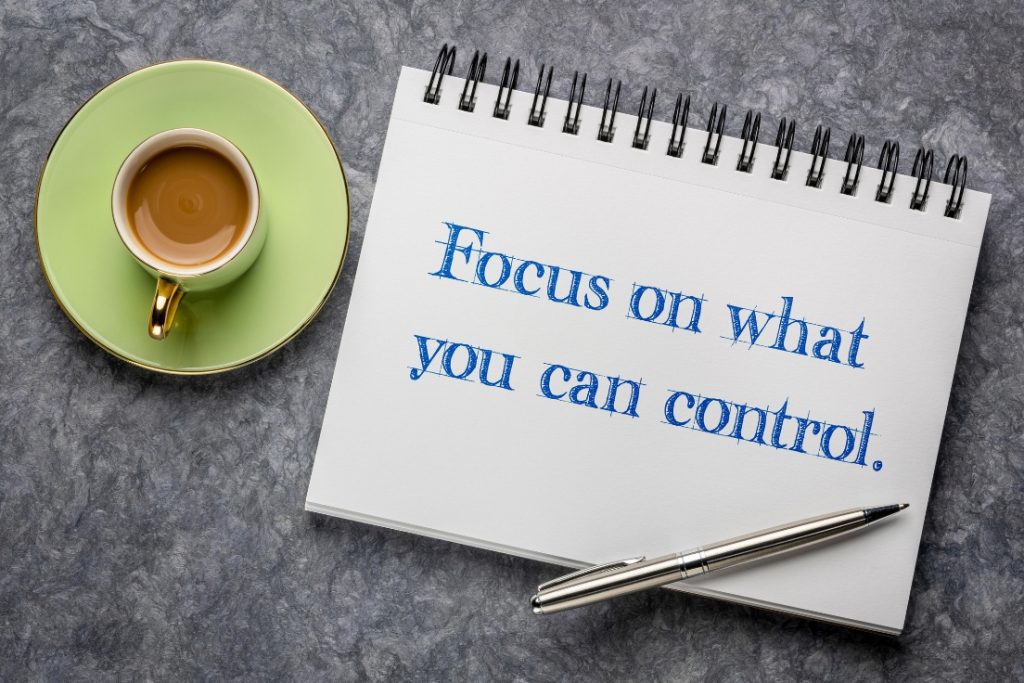
Control Your Controllables
Another helpful strategy in finding peace in the chaos is to differentiate between external and internal control. External forces are things outside of your control:
- other people’s reactions
- office conflicts
- the quality of other’s work
- leadership decisions
What is always within your control, however, is your internal world. You can control your behavior and how you respond to the external forces. Shift your focus from the whirlwind happening outside to the emotions happening on the inside. Some practical ways to ignite this shift are:
- Set boundaries for your bandwidth
- Take one thing at a time
- Prioritize your tasks based on urgency and importance during the chaos
- Give yourself grace along the way
Build a Support System
Connection is ultimately what makes us human. Finding that safe place to connect is crucial to reducing feelings of being overwhelmed. Knowing you don’t have to go through things alone can positively impact your ability to regulate. Who can be a part of this network?
- Colleagues
- Mentors
- Managers
- Friends
- Family
Similar to choosing your anchor, leaning into your support system is a great way to stay grounded. Tap into your people by asking for help when you need it, communicating your needs early, and checking in regularly with them. This will also help establish a routine for regulating and create deeper roots in a firm foundation.
Reframe the Chaos
Reframing is a helpful technique that allows you to shift your perspective on a circumstance. The Leaders Institute highlights the benefits of this skill as a great place to start if you’re frustrated in a situation, because it starts with what you can control, your emotions. This is the perfect scenario to apply the phrase “find the silver lining.” Some things to remember as you try to reframe a bad situation could be:
- Know that your situation is temporary
- Interpret change as growth rather than a threat
- Find the pockets of joy through the chaos
- Write down 3 things that you are grateful for every night
Just like you build strength in your muscles through repetition, building the emotional resilience to reframe takes time. Be patient with yourself as you are actively challenged to do the hard thing by pursuing an attitude that will help you heal and grow.
Conclusion: Find the Calm Within Yourself
Just like the busy train station we know too well, the workplace will always carry its own version of constant movement and noise. That external chaos isn’t something any of us can truly control, but how we move through it is entirely within our power. Sure, the controlled corporate chaos around you may never fully disappear, but your relationship to it can shift as you lean into regulating techniques.
At the end of the day, personal regulation is one of the most powerful professional tools you carry. Your breath, your peace, and your perspective are constants you can always return to. Finding your sense of calm isn’t necessarily about silencing the chaos; it’s about discovering the steadiness that exists within yourself.